DAY FOUR
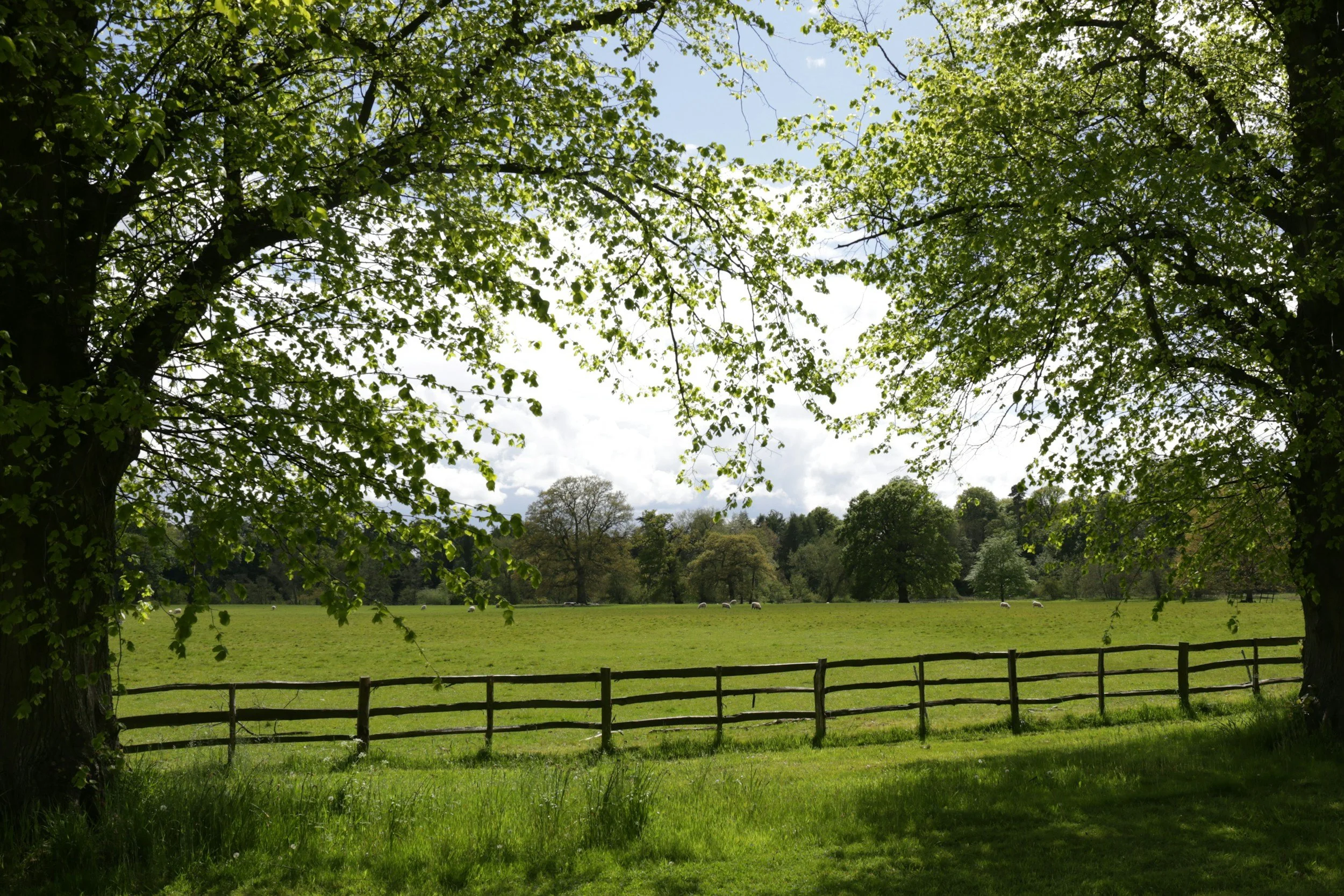
Landscape evidence comes under pressure at Planning Inquiry
The latest session of the planning inquiry saw landscape issues take centre stage. The Council's newly appointed landscape witness, Josh Peacock, gave evidence on rural character, coalescence, and the setting of the High Weald National Landscape (HWNL).
Mr Peacock began by challenging the conclusions reached by Fairfax Aquisitions’ landscape consultants, Fabrik and Ms Brockhurst. Addressing the issue of rural character, he argued that the area should not be regarded as a "settled" landscape, as Fairfax had suggested.
Instead, he described it as a highly dispersed landscape characteristic of the Wealden countryside, comprising small assarted fields of medieval origin. He criticised Fairfax's assessment for relying on an overly broad geographical analysis and argued that its conclusions overlooked important local detail. According to Mr Peacock, Fairfax had been too quick to characterise the area as already semi-urban in nature.
On the issue of coalescence, Mr Peacock maintained that Ansty and Cuckfield are distinctive ridge settlements with separate identities. He argued that development within the shallow valley between them would erode that separation and diminish their individual character.
Turning to the High Weald National Landscape, Mr Peacock highlighted what he described as a strong continuity between the appeal site and the adjacent protected landscape. He argued that any boundary between the two was necessarily artificial and did not reflect a meaningful change in landscape character.
However, the Council's witness came under sustained pressure during cross-examination by Fairfax barrister Zack Symons KC. While Mr Peacock made several clear and unambiguous points in his evidence-in-chief, Fairfax repeatedly challenged the evidential basis for many of his conclusions.
Mr Symons highlighted that Mr Peacock had only been appointed to his role on April 1 of this year and had therefore played no part in developing the Council's original case. He suggested that Mr Peacock had effectively retrofitted his conclusions to support arguments that had already been formulated by others. It was also noted that Mr Peacock had visited the site only once, on 23 April.
Further difficulties emerged when Fairfax pointed out that the Council itself does not formally classify the site as a "valued landscape", despite arguments from local campaigners to that effect. Mr Peacock was also challenged over earlier involvement in signing off aspects of the Council's case which appeared inconsistent with some of the positions he was now advancing.
Cross-examination became increasingly uncomfortable as Mr Symons questioned several conclusions that Mr Peacock claimed were implicit within his written evidence, despite not being explicitly stated.
As the session progressed, Fairfax continued to attack the credibility of Mr Peacock's evidence. Mr Symons even introduced evidence submitted by local campaigners showing that the site had been proposed for inclusion within the High Weald National Landscape in 1987. He argued that the proposal's failure demonstrated that the area had been considered and rejected as unworthy of designation.
With less than an hour remaining in the day's proceedings, landscape witness, Louise, was called to give evidence. Her appearance helped recover some ground for the Council's case, particularly on the issue of valued landscapes.
She argued that the site's exclusion from the High Weald designation was not the result of any considered judgment about landscape quality, but rather a consequence of bureaucratic inertia and the contemporaneous construction of the bypass, which diverted attention and momentum away from the proposal.
Despite ending the day on a more positive note, many supporters left feeling deflated after the difficulties encountered during Mr Peacock's cross-examination. However, there remained a degree of optimism among the inquiry team.
They took comfort from the fact that all written evidence would ultimately be considered by the Inspector and expressed confidence that conclusions on landscape matters may already have been largely formed.
Attention now turns to the next session, where there is an opportunity to cross-examine Fairfax's landscape witness.